
Linen
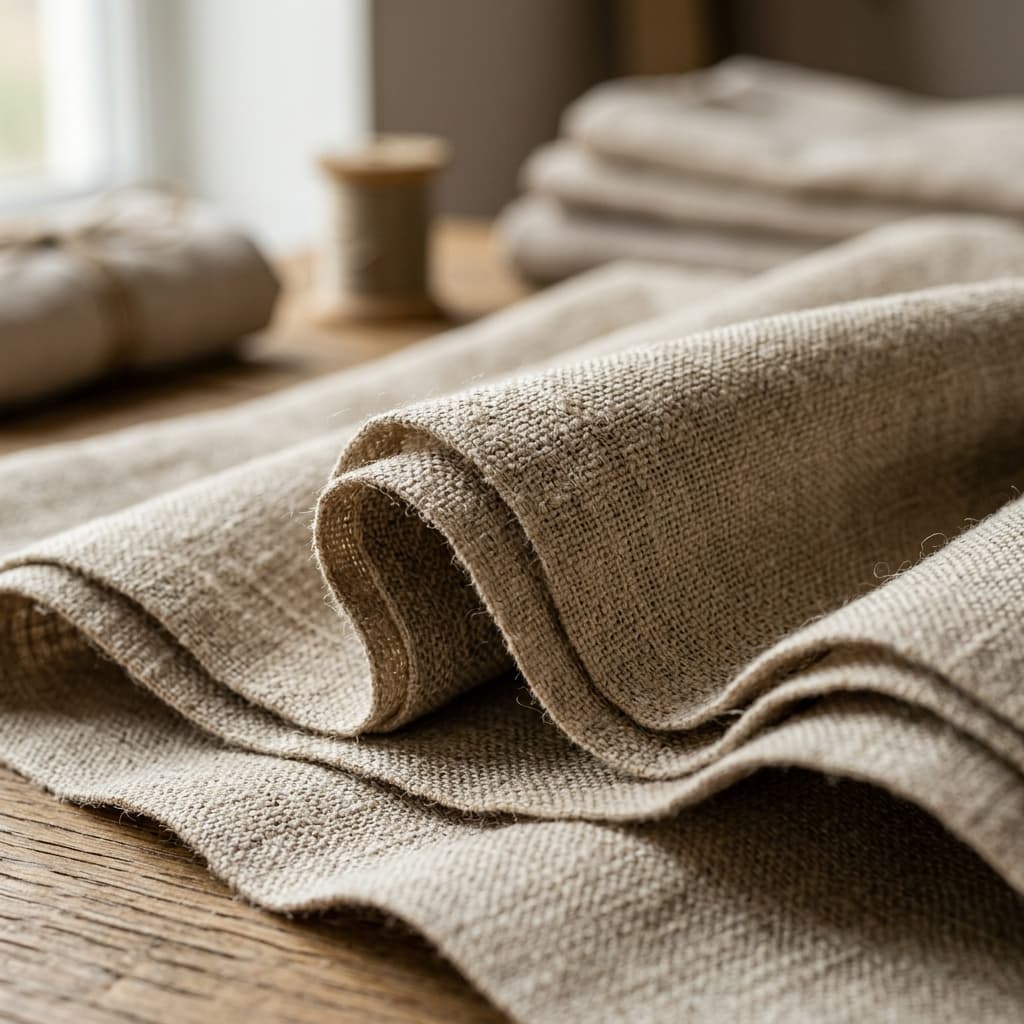
Renowned for its exceptional breathability, crisp texture, and natural elegance, linen is a premium textile woven from the fibers of the flax plant. It is widely celebrated as the ultimate warm-weather fabric, offering effortless sophistication and timeless appeal.
Origins
Historically, the finest linen originated from Europe, specifically countries like Belgium, France, and Italy, where the cool, damp climate is ideal for growing high-quality flax. Today, European linen remains highly prized, though significant production also occurs in Eastern Europe, China, and India. Indian linen, in particular, blends traditional craftsmanship with modern weaving techniques to produce high-quality textiles tailored for both domestic and international markets.
Key Benefits
- ✦Exceptional breathability and moisture-wicking properties
- ✦Highly durable, becoming softer with every wash
- ✦Hypoallergenic and naturally antibacterial
- ✦Biodegradable and environmentally friendly when organically sourced
Applications
A Brief History
Linen is one of the oldest textiles in human history, with evidence of its use dating back over 30,000 years. In ancient Egypt, linen was considered a symbol of light and purity, famously used for both the everyday garments of the affluent and the mummification of pharaohs. Throughout the Middle Ages and the Renaissance in Europe, linen was the primary fabric for undergarments, bedding, and table dressings—so much so that the word "lingerie" is derived from the French word for linen, "lin". Its historical legacy is deeply intertwined with human civilization, representing resilience and enduring quality.
Crafting the Cloth
Linen production is a labor-intensive process that begins with harvesting flax plants. Once harvested, the plants undergo retting, a process where they are soaked in water to break down the natural pectin holding the fibers together. Following this, the stalks are subjected to scutching and heckling to separate the long, usable fibers from the woody core. These fine fibers are then spun into yarn and woven into fabric. The complexity of extracting and processing flax fibers is why linen is often more expensive than other natural fabrics, as it requires specialized care and expertise at every stage.
Modern Fashion Trends
In contemporary fashion, linen is experiencing a major resurgence as consumers gravitate towards sustainable, natural fibers. Internationally, relaxed "resort wear" and effortless minimalism have made linen suits and oversized shirts staple wardrobe items. In India, linen has seamlessly transitioned into ethnic and fusion wear, with linen sarees, kurtas, and tailored bandhgalas becoming immensely popular for their comfort in the sweltering heat and their sophisticated, understated aesthetic.
Shop Linen

Curating Linen
Our weavers are currently preparing the newest collection of linen fabrics. Check back soon for fresh inventory.